A character must walk through a door and across a room, sit down and have a conversation with another character.
This clip must show match on action, shot-reverse-shot and we must follow the 30 and 180 degree rule.
OPENING SEQUENCE/ MAIN TASK BRIEF:
To create an opening sequence lasting two minutes of a new fiction film.
The sequence must include: titles running throughout, copyright free soundtrack and copyright free sound effect.
We need to show evidence of understanding of continuity editing. Also need to show theoretical understanding e.g genre signifiers.
We need to come up with a new, original idea which ideally only involved a few characters and one location.
Continuity and Narrative Structure
After completing the preliminary task, I realised the importance of continuity and its role in helping to suspend audience disbelief. By successfully doing this a director would be able to ensure total escapism into their media product. However, in the preliminary task we broke the 30 degree rule, which proved to be a distraction for the audience, failing to suspend their disbelief (below)
Above: shots from the prelim task where the camera suddenly jumped.
Attempting to keep the continuity of our main task was much harder than attempting to do this in the prelim task. Firstly there were many more elements in our main task that we had to consider: the narrative was much more complex. We realised that for the shots to flow together and become coherent the narrative itself had to make sense. The fact that we re-scripted so many times and had to re-shoot so many times shows evidence for this.
Group Dynamics
Working in a group, it was obvious that we would at some point fall out with each other, which we did.
However, had we not sorted things out we may not have done as well on our final cut of Dark Summer.
From this, I have learnt that it is essential to listen to other members of the group and take on their suggestions, as they would mine.
Though we did have our differences, we managed to sort them out, and eventually, we came out with the best possible opening sequence we could have made.
Below: A shot of Anisah and I with some of the equipment on the main shoot.
Planning and Production:
It is essential to plan in detail before shooting.
For the main task, we initially did not plan very well, which led to us wasting time and not getting the desired shots.
In contrast, the group I was in for the prelim task and I planned very well. This was shown in the fact that we were able to shoot quickly and efficiently.
My group and I for the main task eventually learnt to plan beforehand in greater detail.
I have learnt that planning pre-production does not only mean in terms of paperwork. We had to make sure that our actress, who was not in our group was clear on what she had to do.
Researching Genre Signifiers and Audience
Though we did not have to research and include genre and target audience in our prelim task, my group and I realised through research of real media products how important those two factors were to the planning stage.
Were it not for the research we did on genre and audience, the feedback from the audience during our screening may not have been as positive.
What was the most important thing I learnt?
Below: The second edit of Dark Summer which shows lack of continuity and absence of coherent narrative in the latter half.
Having had so many lessons and so much feeback from our edits on continuity, I have learnt that in order to have be successful, a film or sequence must follow the rules of continuity. This includes a coherent narrative, so that the audience do not question the sequence of events and become distracted from the film itself. A coherent narrative, as well as narrative tension allows for suspension of disbelief, which signifies a potentially successful media product. In addition to this, seamless editing also contributes to a continuous sequence.
From the preliminary task to the main task, the most important thing I have learnt about filming and editing media products is that all the different stages of planning, research, production and editing all work in unison with each other. Without one or the other, it would not be possible to create a successful media product. Commitment and attention needs to be placed upon each of these stages to ensure the best possible result.
Though I had used the technologies involved in this project before, it has been a while since I had last used them. However, after having refreshed my memory I found I was able to use the technologies more competently than I had previously.
HARDWARE USED:
Canon HDV mini DV (format of tape: digital). I felt more confident using the camera this time round navigated myseld easily around it. Though we had learnt to change the style of the camera shot e.g. black and white we kept with the normal settings as we felt such effects would not be in keeping with the mood and tone of our opening.
Shot gun mike and headphones. Our group had not previously used the shot gun mike before. We found we were able to set it to two settings, surround and shot gun. At first, we used the mike when shooting, but going back over the footage we realised that it picked up background noise which we hadn't heard over the headphones, so on the main and back up shoots we chose not to use it.
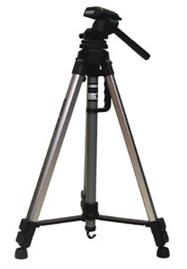
Tripod. This was an essential piece of hardware. Without it we would not be able to shoots shots steadily and without it we would not have gotten the more harder to achieve shots, such as the high angle of Zoe at the kitchen counter. The tripod also us to adjust different heights to correctly frame different shots and helped us to create smooth pans. Below is a step by step example of a pan presented in a flow chart.
A picture of Jess and I shooting a bedroom shot...
SOFTWARE USED:
When it came to editing, we worked on a PC based digital editing suite.
Adobe Premiere Pro cs3. As I had already used Premiere Pro before, there was nothing that I had not encountered before. However, I do feel that after this project I was able to use the program more confidently and more competently. The razor tool and the rubber band tool were most useful to us as we needed them to trim down shots. The most important thing I have learnt is that it is easier to work on seperate timelines as it keeps you more organised and helps you compare differences in different edits. (Below is a screen shot of Adobe Premiere Pro).
There were also several effects and transitions on Adobe. The video transitions we used were fades and 'ghost'. The audio transitions we used were 'audio gain' and 'constant power'. In certain shots we also increased the volume to add effect.
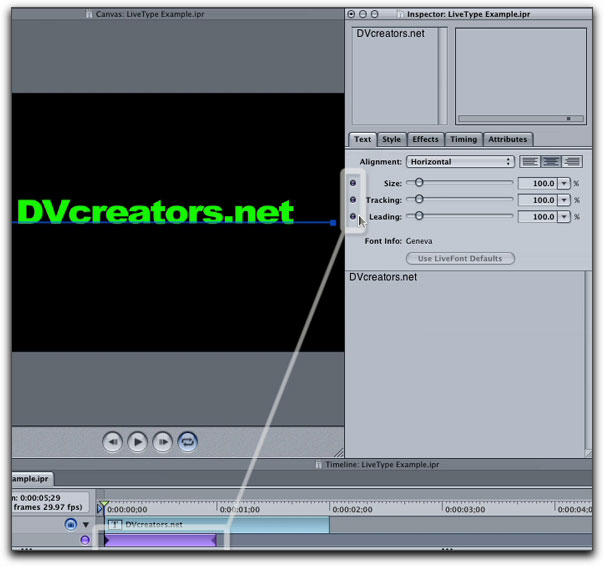
I also learnt to use the LiveType Program on the Mac to create titles. Using LiveType, instead of using the titles software available on Adobe Premiere Pro, was much better because there were a wider variety of effects to use and a wider variety of fonts. I found LiveType much easier to use than the titles on Adobe as all we had to to was type in our desired text and apply effects and fonts. We used the 'wipe' effect for our titles in the sequence. The timeline on the bottom allowed us to control the timing and pace of our titles.
To create the BFE Productions logo, I used a variety of PC based programs, including Adobe Photoshop and titles on Adobe Premiere Pro. To get the moving sunset in the background, Ryan, the technician helped us download a free short movie off the internet. From this I learnt that to get the desired product it was necessary to experiment with a variety of programs.
Below: A shot of Michael and I creating the BFE Productions logo on Adobe Photoshop.
Though men are generally more interested in watching thriller films, women would also be interested in watching Dark Summer. This is because they may be able to relate to the female character Zoe. However, the theme of our film, kidnap, should attract both men and women, due to the recent reports in the media of children being kidnapped. Cases such as the Madeleine McCann Case and the Josef Fritzl Case are very current and extremly shocking. Dark Summer addressing primarily the theme kidnap should attract audiences because of their relation to such real life subjects.
Addressing the audience: Context. How does Dark Summer relate to the audience?
Madeleine disappeared from her hotel bedroom in May 2007.
The disappearance of Summer, in Dark Summer is similar to this case because Summer was also taken from her bedroom, as Madeleine was.
The audience would be interested in watching Dark Summer to learn more about the subject of kidnap as it is currently a subject which is talked about a lot in the media.
Addressing the audience: Uses and Gratifcations
Why would the audience want to watch Dark Summer? Below, I have applied this to the theory of media uses and gratifications.
A psychological thriller revolving around the theme of kidnap attracts the audience because of its relevance in today's society.
The genre of psychological thriller should attract the majority of men and some women.
The character, Zoe attracts the female audience because she is someone they could relate to.
Zoe also attracts the male audience because she is attractive.
EQUILIBRIUM:
We started off with an initial equilibrium to settle the audience into the film.
By doing this we are also following the classic narrative pattern as there is initial equilibrium in the story.
DISRUPTION:
Following the classic narrative pattern, there is disruption later in the opening sequence when Zoe finds Summer missing from her bed. However, the disruption in the sequence could also be identified in the shots with the masked man at the door or the screaming.
By following the classic narrative pattern, the audience will be able to fully suspend their disbelief as they will be expecting disruptions in the narrative.LD UP OF THE ENIGMA
The shot of the masked man at the fridge is the twist in our opening. The audience does not suspect this as there is nothing prior in the sequence to indicate something like this.
The enigma is whether the masked man is the real culprit of the crime.
IS THE AUDIENCE OBSERVING THE SEQUENCE OR PARTICIPATING IN IT?
HOW HAS THIS INCREASED NARRATIVE TENSION?
The audience see the masked man at the window but Zoe does not. This heightens tension as Zoe is not aware of the danger which the audience are aware of.
This knowledge means that the audience are observing the events taking place, and are not participating in it as they are aware of the dangers but are unable to intervene. That they are not following the narrative from Zoe's point of view means also means that they are mearly observers to the opening.
We can see this in the bird's eye view shot, which connotes surveillance. This is also shown in the hallway shot, where the audience stays on the view of the stairs and the hallway whilst Zoe is upstairs looking for Summer. This increases narrative tension as the audience cannot see the events as they unfold.The use of the bird's eye view also connotessuveillanceandobservation.
HOW WOULD WE MARKET DARK SUMMER?
As Dark Summer is financed primarily by BFE Productions, a big-budget production company, we would be able to spend more on marketing the film if it were a real media product. The callouts below show how we could market the film commercially.
HOW DID WE ATTRACT PEOPLE TO THE SCREENING OF OUR OPENING?
As we were required to screen the opening in school, we made sure that we targeted those students that would fall into our primary target audience.
To do this, we set up an event on Facebook and invited those aged 15 and over...
We also made notices to go into class registers to increase awareness of the screening...
Below: A shot of our audience at our film opening screening.
AUDIENCE FEEDBACK: DID WE ATTRACT THEM SUCCESSFULLY?
Below are some examples of the feedback we got from our audience in our screening:
Overall, the audience feeback we got was positive. We had both young male and female adults attend so we could get the widest range of feeback possible.
Many members of the audience correctly identified the genre of Dark Summer as thriller, though some thought the genre was horror. However, this is because many conventions of thriller films also fall under the conventions of horror films.
The audience also correctly identified the target audience being "teenagers", or "older teenagers", or "young adults".
We recieved a mixed response for the question "What type of cinema would you expect to see this film". Some members of the audience expected to see it in an independent cinema, whilst others expected to see it in a large multiplex. This is probably because of the professional look of the BFE Productions logo contrasting with the more arty feel of the shots.
The audience correctly identified the themes of Dark Summer.
The audience liked our variety of camera angles, titles and music.
Improvements suggested were: more music, darker lighting, more suspense.
In conclusion, we were rather successful in attracting our audience. The majority would have watched the rest of the film if it were a real media product and gave sequence relatively high scores out of ten.
Primary Target Audience: Young adults of both sexes aged 15-28
We decided that our core target audience would be men and women aged 15-28. This is because men and women of this age range are more open to watching indie style films. Because of this, if Dark Summer were a real media product we would hopefully be able to get it a 15 rating in UK cinemas, so as not to exclude those aged 15, 16 and 17 of our primary target audience. Below is a table describing our primary target audience.
Secondary Target Audience: Adults of both sexes aged 28-38
In addition to our primary target audience, we identified a secondary target audience who would be interested in watching our film. Below is a moodboard of a factfile of our secondary audience.
From this, our audience for Dark Summer would be a broad one. We have quite a wide range of ages and have attempted to target a mass audience. The film would hopefully target a national audience from all walks of life.
Our main production company, BFE Productions is a large, British based company, famous for making high budget British films. However, they also help to finance independent production companies to appeal to a section of the audience market they may not have targeted with their high-budget films. They were also the main producers of the film. Reel is its parent company.
Impact Films is our second production company. They specialise in independent films and target more a niche market. The finance for 'Dark Summer' came mainly from BFE Productions, though Impact paid a small share of it.
Comparison with The Duchess (Dibb, 2008)
(The Duchess. Moodboard)
The Duchess was financed by BBC Films and Pathe, both British/ European based companies.
The film was produced mainly by Paramount Vantage, a speciality film division of Paramount Pictures. The films they are associated with have a more independent feel than the films usually produced by its parent company.
Qwerty Films, a British based production company also helped to produce the film.
Distribution rights to The Duchess were acquired by Paramount Vantage.
The theatrical trailer for The Duchess below shows that the film was financed by Pathe in the first show and all other production companies and distributors are mentioned in the credits in the last shot.
How is this similar to Dark Summer?
BFE Productions is a company which usually produces high budget films. However, it produced Dark Summer in association with Impact Films, and indenpendent production company to target a more niche market, like Paramount Vantage and BBC Films, Qwerty Films and Pathe.
Unlike The Duchess, Dark Summer does not have a distributor. What kind of distributor might aquire these rights to Dark Summer?
If Dark Summer were a real media product, to attempt to aquire a distributor we would have to release the film in British and European based film festivals.
We would have to go to British film festivals, such as the British Urban Film Festival, which screens indepedent films to target the British audience.
The Cannes Film Festival, in France is internationally renowned. If we were to screen Dark Summer in such a film festival, the film would hopefully get European and American recognition, as well as British recognition. By doing this we would be more likely to pick up a distributor.
Comparison with Paranormal Activity (Peli, 2007)
(A still from the Paranormal Activity trailer)
Paranormal Activity, an independent film directed by Oren Peli first premiered at Screamfest Film Festival in the US on Oct 14 2007.
It was then subsequently shown at other films festivals, such as Slamdance Film Festival and Sundance Film Festival in an attempt to pick up a distributor.
Paramount Pictures eventually aquired distribution rights.
If Dark Summer were a real media product, we would hopefully be able to aquire a distributor through gaining recognition through film festivals as Paranormal Activity did.
What examples of British distribution companies would be interested in distributing Dark Summer?
E1 Entertainment UK: Distributor of theatrical, home video and TV production companies. They operate across a number of genres. Recent releases include Away We Go and An Education.
Artifical Eye: Long established leading distributor of independent and foreign language films. Recent releases include Fish Tank and The White Ribbon.
These distribution companies would distribute Dark Summer if it were a real media product because they both specialise in independent films.
What type of cinema would the distributor distribute Dark Summer?
Our primary target audience are males and females of ages 15-28. This market usually watches films in big multiplex cinemas, such as Vue and Cineworld. Therefore, the film would be distributed to these cinemas.
Our secondary target audience are adults of both sexes, aged 28-38. This more mature audience more often frequent independent cinemas. And as Dark Summer is an indie film, we would also screen it in selected independent cinemas, such as The Prince Charles Cinema, the Rio Cinema and the Phoenix.
Our coursework opening sequence, Dark Summer has characters representing two different social groups:
Females: girls and women
Age: children and young adults/ teens
We did this through the script, costume and mise-en-scene. Below I have expanded on the representations of these two social groups.
AGE: CHILDREN
How are young children conventionally seen in society?
How does the character of Summer follow this representation of young children?
We do not see her in the opening sequence. This shows the audience that she has always been vulnerable to attack.
Summer has Zoe to babysit her. She needs someone older to look after her as she is not old enough to look after and protect herself.
Summer was kidnapped, conforming to the convention that children need protection.
Her room is full of childish things; fluffy cushions, pictures of animals, music box.
Summer being kidnapped shows how innocent and helpless she is.
AGE: TEENAGERS
How are teenagers conventionally seen in society?
Does the character, Zoe follow this representation of teenagers?
Being trusted to babysit Summer shows her level of responsibility. Zoe is not wholly irresponsible and lacking in maturity, like child.
Her Blackberry and costume conform to the fact that teenagers are interested in style and the latest technologies.
Zoe being polite on the phone to Mrs Matthews shows that she is respectful of her elders, and not rude and stroppy as some people might expect her to be.
She is obviously not involved with gang culture or crime as many teens in Britain are nowadays.
She is responsible for Summer's safety. Zoe has failed in her responsibility to look after Summer though the kidnap is not something she could have easily prevented. She is not mature like an adult.
GENDER: FEMALES
How are females conventionally seen in society?
How do the characters in Dark Summer follow or defy the stereotype of females and women?
Summer being kidnapped shows her vulnerability as a female child.
Zoe defies the stereotype of passive and sensitive females as she appears strong and forceful in the scene where she receives the anonymous phone call.
Zoe follows the stereotype of childcare being a woman's job because she is babysitting Summer.
After going over our initial ideas and confirming our final idea, we decided that the genre of our opening sequence most likely fitted in the sub-genre of psychological thriller. Though some thriller films have death and murder in them, the absence of it in our opening sequence allows the audience to be clear on the fact that our opening sequence is not a horror, revolving around gory murder. The hidden identity of the masked man and the anonymous phone call show the audience that this is a psychological thriller. The kidnap of the child is also a theme prevalent in other sub-genres of thriller films e.g. crime thrillers. However, before we started planning we had to brainstorm conventions of psychological thrillers to make sure we would achieve the best opening sequence possible
Below I have analysed and compared Dark Summer in how it uses, develops or challenges the forms and conventions of real media products.
How does Dark Summer use, develop or challenge the conventions of the genre of psychological thrillers?
Comparison to a real media product: When A Stranger Calls (Walton, 1979)
Narrative Conventions
Dark Summer can be identified as following different types of narrative structure conventions usually seen . Below, I have applied the sequence to two notable narrative theories:
ROLAND BARTHES' THEORY: The Five Codes
VLADIMIR PROPP'S THEORY: Classic Narrative Pattern
The style and form of our opening sequence is neat, though full of tension. The smooth camera work and narrative shows the audience that our opening is a sophisticated film, like other thrillers such as When A Stranger Calls. Following typical narrative techniques found in other films conform to the convention that all films follow some form of narrative structure. We also followed the thriller convention of victims and villains, and vulnerable women and children.
Opening of the sequence fades up from black, the first shot introducing the film studio, "NEW LINE CINEMA presents".
A cut to the next shot introduces the production company, "a CONTRAFILM/ FIRM FILMS production"
The director, Joel Schumacher is introduced in the next shot.
There is a quick cut of what appears to be the number 23 repeated over and over again in the shot.
The protagonist, Jim Carrey is introduced, whilst in the next shot, the title of the film, The Number 23 is shown.
Following these titles, there are various facts about the number 23, for instance "THERE ARE 23 LETTERS IN THE LATIN ALPHABET"
In addition to the facts about the number 23, the titles also include other actors and actresses e.g. Mark Pellegrino and members of the technical and creative team e.g associate producer LINDA HALL
The shots and titles jerk around the screen.
The end title shows the number 23 disappearing under spreading blood.
Connotations:
The typewriter style font used is suggestive of the old fashioned typewriters used prior to the invention of computers. This suggests that the number 23 has historic significance in our society and is of great relevance to both the audience and the film.
The use of capital letters for the names of the actors and members of the technical and creative team help them stand out from the sequence.
The facts regarding the number 23 written out all in capital letters show that they have great significance to the film.
The words and sentences often appearing in red connote danger and death.
The number 23 repeated again and again connotes obsession.
The shots and titles jerking around the screen unnerve the audience, causing physical and emotional discomfort. It suggests that the rest of the film will be as jerky and unnerving as the titles are.
The last shot connotes how everything connected with the number 23 will end in death and destruction.
The Graphics
Denotations:
Spreading blood spatter over the shots and titles.
Changing typography (always changing to the number 23)
Connotations:
The blood connotes danger and death, while its spreading over the shots suggests that this danger and death will spread over all events in the film.
The typography constantly changing to the number 23 suggests that all events in and people are related to it in the film.
THE MUSIC
The constant drumming in the background keeps the pace fast moving, not allowing the audience to settle down.
The sharp noises are meant to throw the audience out of their comfort zone.
Preliminary Synopsis of Group Opening Sequence:
Below is the synopsis of our opening pre- production
A phone rings and we see Zoe, a teen around 18 years old, babysitting in a house.
She then goes to the kitchen,
A masked man is standing at the window wearing a mask and dark clothing. Zoe does not acknowledge his presence but the audience sees him.
Zoe hears a scream and strange noises coming from Summer's room (the child).
Startled, she drops a cup of red juice on the floor and runs upstairs to check on the child.
She opens the door, glancing at drawings, a rocking horse (and maybe a music box).
The window has blown open and as she approaches the bed, slowly pulling open the covers she realises that the child is gone.
We followed this synopsis when presenting our proposal to the class and teacher. Below is a copy of our handout. It includes the synopsis, influences, genre and style of the film, themes, target audience and the practicalities of the proposal.
Final Synopsis of Group Opening Sequence
Zoe, a young girl of 18 is babysitting Summer. The sequence starts with her at a table in the kitchen doing work.
She receives a call on her Blackberry from Mrs Matthews, Summer's mother.
After the conversation, she gets up and walks to the fridge to get out a jug of red juice.
As she walks away from the fridge, we see a masked man, clothed in black standing outside watching her. Zoe does not see him.
She goes to the couter and pours herself a drink. As she is drinking it, she hears a loud scream which startles her, making her drop the cup of juice on the floor.
She runs out of the kitchen, up the stairs to Summer's room.
In Summer's room she goes straight to the bed to check on the child, but sees an empty bed. She looks puzzled, and calls for Summer to stop hiding and come out.
Zoe then notices the music box which is playing on the bedside table, and being unnerved shuts it.
She walks out of the room checks the other rooms in the house and goes up to the second floor, calling out for Summer.
She realises that Summer is not in the house, and sitting down on a step, Zoe starts to panic.
The house phone starts ringing, interrupting her thoughts. She runs down the stairs and picks up the phone shouting, "Hello?! Hello?! Who is this?!"
We had to change the synopsis of the sequence, because we realised after our test shoot that the narrative did not make sense.
This was the emergency back up shoot we arranged to sort out our continuity errors.
Luckily we were free to shoot after school, with the exception of Anisah who had prior commitments she could not get out of.
The shoot was extremly successful as we all understood what we had to do and we were able to get the shots we needed.
Going over our shots, we can see that we no longer have any continuity errors. When editing, our sequence will hopefully look much better.
Our third shoot went relatively well. The above link shows our 3rd cut with an alternative ending.
However, looking back on our footage, we realised that we had several continuity errors. We have arranged one further back up shoot to correct these mistakes.
Below are the slots we decided to book into for editing our sequence. They show the weeks beginning March 1st 2010 and March 8th 2010. (click image to enlarge)
The Friday shoot did not go too well. We did not manage to get the shots we planned on re-shooting. This may have been because we did not walk through the changes to the script with our actress, this meant that she did not understand what she was meant to do.
The Sunday shoot was cancelled because our actress was ill. This is not something we could have forseen, and therefore we will have to shoot most of our shots on the back up shoot.
The test shoot went really well. We followed the shooting schedule and managed to shoot at least every shot three times.
We shared out the work between the group members, and hopefully when we go back to school we will be able to identify the areas which were good and the areas which need improving.
IDEA 1:
The film opens with the camera tracking a young woman going about her morning routine ie putting on a robe, tying up her hair. She then wanders into the kitchen to make a cup of tea. After making her tea, she carries it on the way to the living room. The door to the living room is closed and there is a pool of blood collecting under the crack of the door. This startles her, making her drop the cup of tea which smashes on the floor. Equilibrium is disrupted. TA: Teenagers, male and female adults aged 18-35 Genre: Thriller/ Drama
IDEA 2:
A girl wakes up in a room after a night a drug abuse filled with used drug parephenalia (used syringes, coke powder on mirrors). She attempts to 'sober' herself up as she is still very groggy and disorientated. The camera will be half handheld and half filmed on a tripod to reflect her mental state. As she walks out of the room she stumbles over her friend who is apparently comatose from drug use. Failing to wake her friend up she checks her pulse and realising she is dead, starts crying and screaming. TA: teenagers, young adults aged 18-25 male and female Genre: Drama/ Indie
i) What forms can opening sequences take? Can you list the conventional features of opening sequences?
Opening sequences are unique to each individual film as different directors and different narratives result in lots of variety of the openings. However, there are several conventions which all opening sequences of different films of different genres share. Certain elements such as shot types, music, lighting and pace and overall the mise-en-scene help to represent the genre in which the film as a whole is classed in. And inspecting in deeper depth they can also betray certain parts of the plot which will only later become apparent in the film. For instance, in Legally Blonde, the upbeat music, fast pace and bright lighting show the audience that the film will be a light hearted one. The overall colour scheme of pink implies that the film will be targeted towards girls and women and be about a girly-girl. And finally, the shot of the protagonist and her partner show that the film will be about the protagonist's relationship with her boyfriend, and possibly another man as the audience cannot expect the relationship to be perfect through to the rest of the film.
Characters, the plot and the setting are always established in the openings of films. However (taking Todorov's classic narrative pattern into account) these three elements will suffer some amount of disruption, throwing the initial equilibrium out of balance. This is sometimes revealed at the end of the opening sequence.
The opening of a film is an essential tool in setting up the tone for the rest of the film and also starts to formulate ideas about the rest of the film in the audience's mind. The setting up of a seemingly normal scene will have the audience guessing what will happen to throw the current situation out of balance, whilst already showing a disruption in the equilibrium will have the audience guessing how order will be restored.
ii) What narrative functions of opening sequences can you identify?
- The complete narrative of a film is never fully revealed to the audience, leaving them guessing throughout the rest of the film but certain elements (props/ dress/ mise-en-scene) can hint to what is to eventually come.
- Some background information is revealed though enough to keep the audience on tenterhooks.
- Music, lighting and shot types used can set up a tone for the rest of the narrative for the audience.
- The order of shot types also sets the tone for the rest of the narrative, for example, jumping from an MS to an ECU can throw the audience out of balance to create mystery/ discomfort/ tension.
- Important information about the characters can be revealed, but sometimes this can be misleading to surprise and shock the audience later in the film.
iii) What do audiences gain from watching the opening sequence?
The narrative sequence can help set up mystery and an enigma for the rest of the narrative to keep the audience guessing. Also from this, excitement and tension are built up as the audience will be keen to know what happens in the rest of the play. Knowledge of the characters is usually provided and the tone is set for the rest of the film, so the audience will know what to expect. The opening sequence can also act as a first impression for the film, and from this the audience will decide whether they will like or dislike the rest of the film.
iv) What do film-makers gain from including an opening sequence?
An opening sequence acts as a stepping stone for film-makers and allows them progress steadily to the themes they want to introduce for the rest of the play. A good opening sequence can hook the audience in and make it easier for them to understand the themes which will become apparent in the rest of the film. This is not only crucial to the audience, but also to critics as a bad opening sequence may affect their judgement for the rest of the film. This not only reflects badly on the film-makers, but also on the actors who have put their reputation on the line when participating in the film. By filming and editing an opening sequence well, it shows the audience and critics that the film makers are capable of reworking a formula that has been overdone.
Roland Barthes, a structualist thinker has written an essay on a French novel called S/Z. In this he identified several codes, or a set of rules, which he believed linked together in the production of all kinds of stories. He proposed that all stories use the same five codes and all all genre signifiers can be grouped under these five points to create a narrative. The five codes which he proposed are:
1) The Action Code: depicts the events which take place in the narrative ie who/where/when. Action codes are placed in chronological order.
2) The Semantic Code: refers to character or characterisation. The actions in the narrative are made clear by the character's take on the events.
3) The Enigma Code: involves the setting up of a mystery, its development and its resolution.
4) The Referential Code: explains or informs e.g. mise-en-scene is a referential code.
5) The Symbolic Code: the reading of the implied meanings of signs, which transform them into symbolic representations e.g. a character can symbolise weakness.
Applying the five codes to the opening of Don't Look Now
The Action Code
- It is not made clear to the audience what relevance the first image of the opening scene (the wooden window shutters) has to the rest of the film as after this shot, we see a young girl in a red raincoat playing in a garden/ field. By showing the shot of the window shutter the audience will know that it is of great importance in the narrative and that it will appear later in the film.
- The first character we see is the young girl in the red raincoat. This shows the audience that she plays a pivotal role in the film.
- Next we are introduced to a young boy and what seems to be a couple. We as the audience assume that they are linked to the young girl in some way and will also play major roles in the rest of the film.
- The fact that we are shown in extreme detail the shots of the churches on the slides, which the man is viewing, suggests to us that they are key elements to the narrative of the film.
- As we do not see the woman's face straight away leads us to believe that she is a rather mysterious and private person.
- The shot under the magnifying glass where the camera zooms in on a red cloaked figure hints to us that they could end up playing a part of great significance in the play. This, coupled with the fact that there is tense music tells us that this character in red is possibly a bad one.
- The young girl drowning tells the audience that the equilibrium of this family's ordinary everyday life has been disrupted. They will be left wondering what happens in the rest of the film now that this tragedy has befallen them.
The Semantic Code
- The first character we see is a young girl wearing a red raincoat. The fact that she is the first one introduced to the audience suggests that she plays a pivotal role in the rest of the film. This is confirmed when the audience sees her drowning and dying, as they are then left wondering what will happen to the rest of the characters in the aftermath of the young girl's death.
- The second character we see is the young boy riding on a bicycle. The fact that they make no verbal exchange suggests that they are not very close, but by putting them both in the same surroundings implies that the boy and the girl are linked in some way.
- Both the young boy and girl are seen playing as one would normally expect to see young children do. There is nothing strange or mysterious about them that could possibly hint at anything to come later in the film.
- We are finally introduced to a man and a woman (most possibly a couple) sitting in a living room. The fact that we do not immediately see the woman's face suggests to the audience that she is mysterious, private and possibly has something to hide. We do however, see the man's face. He seems to come across as a very ordinary man in an ordinary surroundings. The man, looking through a slide show looks extremly confused as his brow is furrowed. This suggests to the audience that there is something which is not right in the scene.
- Once we see the woman's face, she too seems like a very ordinary person. There is nothing in either of their characters which could betray any element in the plot which is to come.
- The couple are affectionate and civil to each other, connoting that they are in a happy relationship which nothing going wrong in their lives.
- The man's agony and the woman's reaction to the girl's death implies that the rest of the film will be about their dealing of the aftermath of her death.
The Enigma Code
- The colour red seems to run through all of the opening sequence. The young girl (who eventually dies) wears a red raincoat. The boy, riding his (red) bicycle, cycles over some glass, breaking it as the water in the river is disrupted by the girl's ball. The ink on the slide which the man is observing under the microscope runs from the red cloaked figure in the shot. This underlying theme of red in unusual circumstances (girl in the red cloak drowning/ boy on red bicycle breaking glass/ red ink running on slide) suggests to the audience that this theme will be recurring through the rest of the play. Also, the red colour is similar to blood, connoting murder and death.
- The young girl playing precariously by the river shows the audience that something bad will happen to her.
- The man tipping over his glass shows that the ordinary situation he is in is not so ordinary after all.
- The camera zooming in on the red cloaked figure in the slide suggests this mysterious person will appear later in the film, possibly bringing danger with them too.
The Referential Code
- The scene we are observing is of a young girl and boy playing in a garden/ field during the day in an ordinary fashion whilst the shots of the couple inside the house also show a normal day for them with the usual clutter of a house and a comfortable, lived in look. There is little in the mise-en-scene which could inform us of the mystery behind the plot.
- However, the young girl disturbing the water with her ball, the boy breaking the glass and the man tipping his glass over shows disturbances in what seems to be an ordinary day. This suggests that something will happen that will disrupt this equilibrium and throw the rest of the film out of balance.
- When the young girl is pulled out of the water, the man and the girl being covered in mud show the ordinary life becoming disrupted, this in turn sets up the tone for the rest of the film.
The Symbolic Code
- The young girl in red and the red cloaked figure in the slide are symbolic of danger and death. This is because the young girl dressed in red drowns at the end of this opening scene and ink of the red cloaked figure in the slide running looks alarmingly like blood.
- The boy breaking the glass at the same time the girl disturbs the water with her ball are sumbolic of the calm of everyday life have been broken (the equilibrium being disrupted).
Claude Levi-Strauss was a French anthropologist who believed storytelling is used as a means of coping with the basic challenges and irresolvable problems. Levi-Strauss said that the elements of a story (or a narrative) has two main characteristics: that it is made up of units that are put together according to certain rules and that these form a relationship with each other, based on binary pairs which provide the foundation of the structure.
Levi-Strauss' theory of binary opposites can be applied to many aspects of a film narrative for example the hero and the villain, fear and happiness, the rich and the poor etc. Below I have applied the theory of binary opposites to the openings of Pale Rider (Eastwood 1985) and Die Hard I (McTierman 1988).
Pale Rider (Eastwood 1985)
- forest/ desert/ mountains
- silence/ noise
- nature/ civilisation
- domesticated animals/ wild nature
- peaceful village/ warlike horses and riders
- civilised/ uncivilised
- frantic riders/ slow moving villagers
- music/ no music
- moving shots/ still shots
- shadow/ light
- dangerous horses and riders/ safe environment of village
- rivers/ plains
- victims/ attackers living/ dead destruction/ organisation
- nature/ guns
- helpless villagers/ riders with power
- fire/ water, plains, rivers
- disturbed/ undisturbed surroundings
- nature (paganism)/ christianity
- thunder, rain/ good weather
- country folk/ town folk
- being accepted/ being victimised
Die Hard I (McTierman 1988)
- nature/ machinery
- ground level/ in air, in flight
- suspenseful music/ normal, everyday situation
- caucasian people/ asian, Japanese people
- woman walking forwards/ man walking backwards
- office party/ home life
- absent father/ present mother
- single man/ married man
- wife with husband's surname/ wife with maiden name
- HA/ LA
- empty elevator/ crowded party
- rap music/ classical music
- Holly's husband/ Holly's suitor
- confrontation with husband/ speech to troops
- party/ motorways, vans, cars. Heavy industrial work
- tense music/ man humming
- enclosed space/ wide open space
- man/ machine
- American/ German
- photos/ real people
1) Who did you work with and how did you manage the task between you?
I worked in a group with Jessica Ball, Jacob Vydelingum and Wanda Dunham. We initially had to arrange a group meeting to discuss ideas, write our script, sketch out a storyboard and write our our shot list. This was done quickly and efficiently, all members contributing ideas with little conflict between us. When it came to filming the sequence, Jacob and I shot the majority of it as Jess and Wanda were required to act in most of the shots. However, we gave them both a chance to work behind the camera when they were not required to act. In professional TV and film industry, there will usually be a camera, sound and light technician, a production assistant all helping the director. As there were only four people in our group, with two members being required to act for most of the shot, we would usually take on more than one job per person. They would usually be in the combination of the director also being the camera man and the sound technician and director's assistant being another (it was not necessary for us to have a light technician). We would all share these jobs between us when we were not required to act. When it came to editing, all members of the group made contributions to editing the sequence. We all made suggestions and made sure that all members of the group had a go at editing, espescially Jess as she did not do GCSE Media and had no previous experience in editing. However, she was quick to pick up the basics and was able to contribute many suggestions to the sequence. As a group we worked very efficiently and we learnt how to communicate with each other. Our respect for each other and good time keeping and communication skills meant we had little or no conflict in the group.
2) How did you plan your sequence? What processes did you use? What theories did you try to take into account?
After initially planning our storyboard in the meeting we made sure we walked through it to get an estimate of the length of each shot and whether or not the sequence would make sense. When drawing out the storyboard, we made sure that we followed the 180 and 30 degree rule and also that there were gradual changes in the variations of shot types (e.g. from MS to CU to ECU, not from LS to ECU) to make the whole sequence flow more. When scripting, we also had to make sure the story made sense to the audience and that there was narrrative flow. We also had to decide on the location and the placement of the camera as in addition to writing our our shot list. After planning this, we finallised everything by making sure everyone in the group was clear on what was happening in the sequence and what was required of us; a subject walking into a room for us to demonstrate match on action, the subject approaching another person, sitting opposite them and having a conversation for us to demonstrate shot-reverse-shot. When it came to shooting were realised that were were not able to follow the storyboard exactly as there were a few problems with continuity, this we adapted though we still followed the shot list, which proved to be very helpful in keeping us organised.
3) What technology did you use to complete the task, and how did you use it?
Before shooting our sequence, we were instructed by our media technician, Ryan in the proper ways of handling and using the technology we had available to use for this exercise. We were also taught by our teacher how best to shoot it e.g. shooting each shot longer than we intented it to be so that when it came to editing we would not have to worry about the shots being too short in length, so that we would end up with the best result as possible.
Our hardware consisted of a Canon HD Mini DV camera with digital tape, a shot gun mike to increase quality and clarity of sound , headphones and a tripod. The tripod helped us to create smooth pans across the room as the girl enters and approaches the other girl sitting down. We were also able to adjust the height of the tripod to make sure that the girls would be at eye level to the audience e.g. when sitting down and having a conversation.
We edited on a PC based digital editing suite, using Adobe Premier Pro and editing in a non-linear fashion as it was easier to shoot shots according to location, instead of in order. In Adobe, we dragged our whole captured sequence on the two timelines which were provided by default. The razor tool was used to to cut the sequence up into its seperate shots and the rubber band tool was used to cut off unnecessary parts of the sequence. When cutting up the sequence, we put each shot on alternate timelines to make the sequence clearer to us and to organise ourselves. To order the sequence all we had to do was drag them into order, making sure there were no gaps between them. We used the source monitor to view each individual shot when needed and we used the output monitor to view the sequence as a whole. Finally, we added titles at the beginning of the sequence using the on board titling software and we also made the end of the sequence fade to black, by adding on a transition from Adobe. This was done simply by dragging the effect (which was provided to the left of the timelines) and dropping it to the desired place, and to shorten it we once again used the rubber band tool.
4) What factors did you have to take into account when planning, shooting and editing?
When it came to planning the first thing we had to decide was what we were going to shoot and who would not mind acting in it. We also checked that the location we wanted to shoot the sequence in would be free at shooting time. Though we had no problem booking the room where the majority of the sequence would take place, the difficulty was when we were going to shoot the shot where the girl walks along the corridor as other groups wanted to use it at the same time as us. In the end we compromised with the other three groups, with us planning to shoot the shots inside the classroom first and shooting the shot of the girl walking along the corridor last, which gave the other groups time to shoot their corridor scenes beforehand. We went over the storyboard and the shot list several times to make sure the whole group knew what we were doing whilst our two actresses went over their lines to make the scene seem as natural to the audience as possible.
We also realised before shooting our sequence that we only had three people maximum behind the camera when shooting the shots. This presented itself to be a problem as with only two to three people at a time behind the camera there would not be enough people to fill the roles of members of a production crew (director, production assistant, camera/ sound and light technician) which are usually present in the professional television and film industry. To counter this we would adopt more than one role in order to make sure we covered all aspects of film to get the best possible result.
When it came to the day of shooting, we had to move furniture that would be in the way of the two actresses away to eliminate any distractions which may have presented themselves to the audience. We also framed the shots each time before we actually recorded them to make sure that we were all happy with what was in shot. We also tried our hardest to keep to the 180 and 30 degree rule. The lighting we had no control over as we decided that the lighting in the corridor and the classroom would be sufficient, and using the same lighting all the way through meant that the shots would flow into each other more easily. However, sound became a problem to us as we were able to pick up background noise from other people in the media block. To counter this, we had to ask the groups to quieten down whilst we were filming, but to do this we had to be quick and efficient as we were possibly inconveniencing other groups by asking them to keep quiet. We made sure that we did each shot more than once so that we would have more material to work with when editing and that we went over each shot after we shot them so make sure we were satisfied with the result.
When editing we had to make sure that the computer we used was free at the time and that we were able to finish editing in the time allocated to us. We also saved our progress every few minutes so that we would not lose any work should something happen to the computer.
5) How successful was your sequence? Please identify what worked well, and in hindsight, what you would improve/ do differently?
My group's sequence consisted of Girl A walking into a corridor, opening a door from corridor side, a match on action of her opening the door from the inside of the room. Girl B, who is sitting down at a desk reacts to Girl A entering the room, Girl A walks across the room, sits opposite Girl B and exchanges a few lines of conversation with her, which helps us to demonstrate shot-reverse-shot. I also think we created a sense of place well within the sequence as we had clear establishing shots.
I think that the sequence turned out quite well as we demonstrated both shot-reverse-shot and match on action very well. The narrative was easy to follow and would make sense to the audience, adding to narrative flow. However, though our sequence was quite continuous, I think it could have flowed more, this could be due to mistakes made during filming which we had not taken into account at the time.
Firstly, we did not have a close up of Girl A's hand on the door handle as the only shot of her hand on the door handle broke the 30 degree rule when compared to the shot of her actually pushing the door open. This was due to the fact that we had not realised we broke the 30 degree rule and also because when it came to realising this mistake we had already run out of time. The second mistake we made was when Girl A walks across the room, sits down opposite Girl B (shot 6) and starts having a conversation with her (shot 7). There is no flow between these two shots and its looks stiff and rather strange. This was because we had not filmed Girl A walking across the room and sitting down opposite Girl B from Girl B's point of view. This would have made the transition from shot 6 to 7 more fluid. Finally, I think the shot of Girl B apologising to Girl A was cut a bit too short. However, this was because the actress looked at the camera at the end and we had to cut it off, had we realised this mistake beforehand and were given more time we would have been able to rectify this mistake.
Analysing the sequence from the point of view of a member of the audience, I don't think the sequence is particularly successful. The editing is seemless at parts (match on action, shot-reverse-shot) but at other times it looks disjointed and rather strange (when Girl A sits down and starts having a conversation with Girl B). This does not provide a pleasing viewing experience for the audience and does not seem to suspend their disbelief. The audience acts more the part of an observer rather than a participant, though the master shots help to give them a sense of place within the sequence.
6) What have you learnt from completing this task? Looking ahead, how will this learning be significant when completing the rest of our foundation coursework, do you think?
This exercise was set to teach us the basic principles of continuity and filming. I have learnt how directors in both film and TV apply continuity to their material in order to engage the audience and "suture" them into the world they are trying to create. From what I have learnt, I will try to apply to the main task I will be shooting later in the academic year.
I have also learnt the importance of shooting schedules, shot lists and storyboarding and just how significant it is in filming. The clapper board, which before seemed rather insignificant to me, proved to be the tool to help keep the group organised. I have also learnt how directors shoot according to location and not in order as a way to save time and energy. Before learning about this, I had always thought how professional TV and film sequences seemed to difficult to put together, after, having learnt how directors shoot according to location and camera placement instead of in shot order, that the process (though on the outside seems complicated) is actually rather simple and easy to achieve if done well, following basic continuity rules.
The storyboard is also of great significance, being not only an aspect of planning, but also as a guideline to follow when filming. Without the storyboard, we would have not only not known what to do, but we would also be disorganised and disorientated in terms of framing and camera angles.
I also have a greater appreciation of working in a team and have enjoyed working with other people as opposed to with myself. I also think that working in a team will ensure that the end result is better as there are other opinions and perspectives about the work besides your own. Though there was little conflict in my group, I have learnt to compromise and work around other people's ideas during the planning stage.
Finally, this exercise has refreshed my memory on working with Adobe Premier Pro as it had been a while since I had used the software. I am now, with my added knowledge on continuity, more confident the main task later in the year.
(Below is evidence of the planning my group did for this exercise)
Hiya I'm Winnie. I'm currently studying History, English Literature, Economics and Media Studies. I'm really looking forward to starting this new media project though I might need some help!


 My group and I for the main task eventually learnt to plan beforehand in greater detail.

 Though we did not have to research and include genre and target audience in our prelim task, my group and I realised through research of real media products how important those two factors were to the planning stage.